Mumbai, India+91-8967667496connect@kannamwar.comAvailable for global projectsLinkedIn ↗
Kannamwar EngineeringStart a Project

Service

FSRU & LNG Terminal Engineering with Cryogenic Piping

Engineering for FSRU conversions and LNG import terminals: regasification and hull interface structure, jetty berthing and mooring analysis, cryogenic piping design and stress analysis to ASME B31.3, and class and IGC Code compliance. Cryogenic piping is a capability few boutique consultancies hold, and it lets us take an FSRU or terminal scope from marine structure to the regas manifold.

FSRU & LNG Terminal Engineering with Cryogenic Piping

What you receive

  • FSRU conversion scope definition: regas module foundations, hull strengthening, tank and ballast changes, class notation route
  • Jetty, dolphin and mooring analysis for FSRU and LNG carrier berthing (OCIMF MEG4, PIANC)
  • Cryogenic piping layout, material specification and stress analysis (CAESAR II, ASME B31.3) including cold-spring and support design
  • Ship-to-ship transfer and loading-arm interface engineering
  • Structural design of terminal marine works and pipe racks to offshore codes
  • IGC Code, class and flag compliance matrix for the converted unit

FSRU conversion engineering

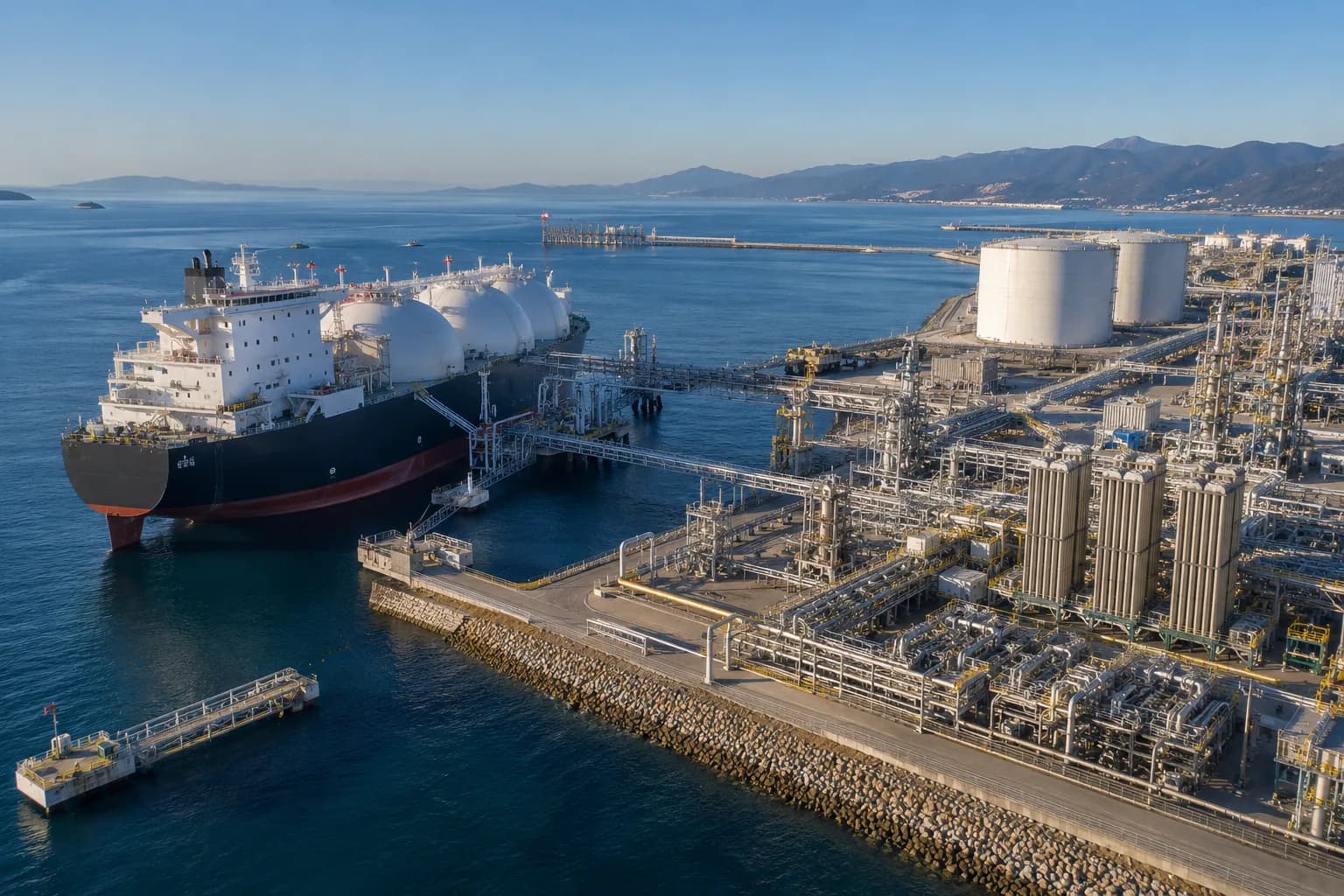
Converting an LNG carrier to a floating storage and regasification unit adds a regasification plant, seawater or glycol heating systems, export manifolds and, usually, a permanent mooring, to a hull built for trading. The engineering package covers the module foundations and hull strengthening, the changes to tanks and ballast, the stability and longitudinal strength re-assessment, and the class and IGC Code route for the new service. Where the unit is spread- or jetty-moored, the mooring and berthing analyses feed the structural design of the terminal.

Cryogenic piping design and stress

LNG service at minus 163 degrees Celsius makes piping stress the governing discipline on any regas or terminal project: thermal contraction, cold-spring, support design and material selection decide the layout. We design and analyse cryogenic lines in CAESAR II to ASME B31.3, specify stainless and nickel-alloy materials and insulation, and design the supports and pipe racks so the marine structure and the piping are engineered together rather than by two contractors.

Terminals, jetties and berthing

For onshore and nearshore LNG terminals we deliver the marine works engineering: jetty and dolphin structures, fender and mooring analysis for the design carriers, ship-to-ship transfer studies and the shore-approach pipeline. India’s FSRU-based import capacity and new terminals in South Asia, West Africa and the Mediterranean use exactly this scope, which we deliver from Mumbai.

Codes & standards

IMO IGC CodeASME B31.3OCIMF MEG4PIANCSIGTTOEN 1474DNV / ABS / LR / BV rules

Software

CAESAR IIAutoPIPEOrcaFlexAQWAHydroSTARSACSAVEVA E3DSP3D

Assets

FSRUFSULNG carriersRegas modulesJetties & dolphinsCryogenic pipe racks

Ready to Start Your Next Project?

Let's discuss how our engineering expertise can bring your vision to life — from concept to commissioning.

Projects that prove it

OSV to WSV conversion — Norway, 200 MT steelDetailed engineering for OSV to Well Stimulation Vessel conversion — deckhouse structure, nesting plans, fabrication drawings, 200 MT+ steel engineered.Vessel pre-purchase survey & inspectionFull vessel condition assessment, thickness gauging, and engineering recommendations — vessel purchased at a 20% discount on asking price.

Related services

OSV & Vessel Conversion EngineeringConversion engineering for offshore support and work vessels: OSV to well-stimulation vessel, barge to pipe-lay barge, tanker to FSO/FPSO and LNG carrier to FSRU. We deliver the feasibility study, the structural, stability and systems engineering and the class approval package, as on a 200-tonne-steel OSV-to-WSV conversion completed in Norway in 2024.Class Approval Drawings & Statutory DocumentationClass approval drawings, calculations and statutory documents for newbuilds, conversions and modifications, prepared to the rules of ABS, DNV, LR, BV, IRS, NK, KR, BKI, RINA and CCS and taken through plan approval on the owner’s or yard’s behalf. Founder experience as an IRS surveyor means the package is written the way the reviewer reads it.Third-Party Verification & Independent Design ReviewIndependent verification of offshore structural, naval architecture and pipeline engineering: design reviews, re-analysis with our own models, structural integrity assessments and owner’s-engineer review of contractor deliverables. Our team has reviewed five jackets and topsides for an operator and assessed 39 ONGC jacket structures, and supports jack-up site assessments in ONGC, ADNOC and Aramco fields.

Regions we serve for this

Offshore, Marine & Pipeline Engineering in IndiaKannamwar Engineering is headquartered in Mumbai and delivers offshore structural, naval architecture and pipeline engineering to operators, EPC contractors and yards across India: ONGC’s western offshore fields, HPCL’s marine terminals, west-coast LNG infrastructure and the east-coast basins. 39 ONGC jacket structures assessed, riser and conductor installation campaigns engineered, and 120+ days of offshore site supervision at Mumbai High.Offshore Engineering Support for the Gulf: UAE, Saudi Arabia, Qatar, Oman, KuwaitEngineering support for EPC, T&I and fabrication contractors and jack-up operators working in the Arabian Gulf: jacket and topside engineering, sea-fastening and load-out packages, lifting engineering, jack-up site-specific assessment support and third-party design review, delivered from Mumbai in the same working day. Saudi Aramco and Lamprell are among our clients.Offshore & Marine Engineering Support for Nigeria and West AfricaEngineering support for vessel owners, installation contractors and terminal developers in Nigeria, Ghana, Angola and the wider Gulf of Guinea: vessel upgrades and deck-equipment installation, pipe-lay and installation engineering, class approval packages and design review. Our team has delivered a pipe-lay vessel piggyback pipeline upgrade and a four-davit installation on vessels operating in Nigeria.Naval Architecture & Vessel Conversion Engineering for Norway and the North SeaRemote engineering support for vessel owners, conversion yards and offshore contractors in Norway, the UK and the wider North Sea: OSV and PSV conversions, deck strengthening and class approval under DNV, stability and mooring analysis, and third-party design review. In 2024 our team engineered an OSV-to-well-stimulation-vessel conversion in Norway that added 200 tonnes of steel under DNV class.

Sectors

LNG, FSRU & Cryogenic InfrastructurePorts, Coastal & Marine InfrastructureMarine, Vessels & Conversions

Disciplines

Pipeline, Riser & SubseaNaval ArchitectureOffshore Structural Engineering

Further reading

FPSO Engineering: Structural Design & Class Compliance GuideFrom hull girder to topside module — engineering an FPSO to class.

Frequently asked questions

What does an FSRU conversion engineering scope include?

Regas module foundations and hull strengthening, tank and ballast changes, stability and longitudinal strength re-assessment, mooring and berthing analysis, cryogenic piping and the class and IGC Code compliance route.

Do you design cryogenic piping or only the marine structure?

Both. Cryogenic piping layout, material specification and stress analysis in CAESAR II to ASME B31.3 are delivered together with the supporting structure, so one engineering team owns the interface.

Which codes govern FSRU and LNG terminal engineering?

The IMO IGC Code and the class society’s rules for the unit, ASME B31.3 for piping, OCIMF MEG4 and PIANC for mooring and berthing, and SIGTTO guidance for LNG transfer operations.